Author Archives: Femflection

SO WHY NOT YOU?

23.jpg  

 By: Anja Uitdehaag

“If your dreams do not scare you, they are not big enough.” — Ellen Johnson Sirleaf

All kids dream big. They want to be super famous, super meaningful, super powerful superheroes. (I used to spend quite a bit of time dreaming about doing something special and be famous for making a positive difference to the whole world in my own way.)

As we mature, these dreams are typically educated out of us. With age comes “wisdom” and a more “practical” perspective. We lower our expectations and often fear failure and risk taking.

Such a shame!

Even if not every aspect of our dreams is realized, our dreams herald big results.

What most successful people have in common is that they had dreams and consistently maintained a “think big” attitude.

The beauty of dreaming big is that it means that the best still lies ahead of you. It doesn’t matter how old you are, how stuck you feel in your life, or where you are right now: with big dreams come big possibilities!

And isn’t that what makes life fun and worth living?

A few tips to get you started realizing your dream:

  • Face your fears and acknowledge them. Confronting your fears doesn’t make them go away, but it will build courage. And that’s what courage is: confronting your fears. If you continuously confront your fears, theywill diminish;
  • Realize that anything worthwhile takes focus, dedication, and follow-through;
  • Think big, execute small. Eat the Elephant One Bite at a Time. Starting small helps you break down that big dream into small, manageable action steps. A small step towards a big dream is often the only motivation you need to take the next step, and the next;
  • When practicing big thinking, seek like-minded people who energize you. Surround yourself with people who believe in your dreams, encourage your ideas and support your ambitions;
  • Cultivate a “can do” attitude. Focus on the positives, the potential, and the possibilities. Crush negativity (“No, I cannot do that”-thinking)
  • Invest in yourself. This could be something as small as buying a self-help book or enrolling in a business class or as big as traveling across the world;
  • Celebrate Your Failures: Each time you fail consider it a lesson learned. Learn from it and move on because with every baby step you take you’re one step closer to realizing your dream;
  • Above all: Believe in Yourself. Belief is the most important part of realizing your dreams. If you believe it can happen, it can happen. To quote Steve Jobs:

    “Life can be much broader, once you discover one simple fact, and that is that everything around you that you call life was made up by people that were no smarter than you. And you can change it, you can influence it, you can build your own things that other people can use. Once you learn that, you’ll never be the same again.” 

    Your story, our platform: If you’ve got a story and would like to share it with other Femflectors, please let us know. Femflection is all about transferring learnings to help others, be they big or subtle. We want to connect with your feelings, your learnings, your reflections or your hopes for the future – in blog or interview format. Express yourself here. Get in touch with us via anja.uitdehaag@femflection.com

    For more content visit our website http://www.femflection.com

Reflecting on Career and Professional Development

stairs of knowledgeBy: Angie Falls

I think about a famous lesson from Confucius around 450 B.C. that illustrates the importance of active engagement and real-time experiences in learning:

“TELL ME, AND I WILL FORGET, SHOW ME, AND I MAY REMEMBER, INVOLVE ME, AND I WILL UNDERSTAND.”

By reflecting on the actions, I took at work and the concrete experiences I had has taught me to recognize that the experiences have shaped a new way of thinking for me.

Communication is one of the most important professional skills that I could develop. I use action-oriented and positive words whenever communicating.

By describing how I perform my work, including skills and tools I use to manage my work tasks give me a clear picture of the past. The learning objectives that I established can highlight the skills that I have developed. I used the PAR strategy to have a clear method to document my accomplishments.

Continue reading

Lindsay’s in Business: part 31: Getting Real

6

I’m on a train, pondering about how fascinating it is how the world can be seen through one of three lenses:

The first is how you are subjected to what’s happening around you.

  • The school announced it’s going to close, which means the night classes that I teach will have to stop.

The second is how you want to see it, interpreting events and opportunities in a way that supports your motivations.

  • The school announced it’s going to close but that could mean the buildings might become available for a community project and my night classes could also be day classes!

Continue reading

BE “YOU-ER”; LEAD LIKE YOU DO

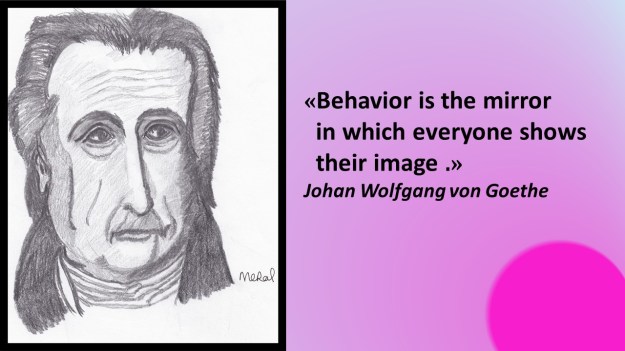
Johan Wolfgang von Goethe

By: Anja Uitdehaag

All things being equal, people will work with people they like. All things not being equal, they still will – John C. Maxwell

Let me start with a question:

In Business or elsewhere in your life, think about times when you tried to be something you weren’t to impress others or gain acceptance. What did that experience teach you? Why do you think you fell into it?

It is tempting for women who report primarily to men to believe they have to copy-paste men’s management, leadership and interpersonal styles. They adhere to many of the “rules of conduct” that spelled success for men.

It is a given that you need to have both substance and business acumen to lead in today’s business environment; However, what keeps leaders focused and able to make tough decisions is their authenticity.

Continue reading

Situation 48: taking things personally

Billy and Betsy are having their monthly ‘mentoring’ session. Boss was not happy with the monthly performance report Betsy has sent in. She takes the criticism highly personally  Billy gets fed up after a while and tells her to toughen up.

(Click on the pictures to see them in full size)

A great leader:

  • Is open to and actively seeks feedback to improve her performance;
  • Learns from her mistakes;
  • Develops a network of support to help her succeed in her role.

How to best handle the situation:

Continue reading

Be Productive No Matter Where You Are

FullSizeRender (3)

By: Angie Falls

The world is full of knowledge to absorb. Day in day out I encounter the need to full fill my hunger for information. On any given topic whenever it occurs. I make it a habit to research on items which are not clear to me. Travelling to places where question marks are raised on every corner I walk to. You know there are times when you get into a discussion about a subject. My slogan then is “I will check it out now”. Praise to my iPhone which I carry with me wherever I go.

Time flies by easily and the focus not to waste it made me aware of the fact that you can be productive no matter where you are. To prevent me from forgetting I always keep a notebook at hand. Yes, even in these days of advanced technology I prefer to write down notes. It gives me a better sense of connection with my subject.

Continue reading

The secret to becoming charismatic is less about you and more about how you make others feel.

27.jpg

By: Anja Uitdehaag

 Recently I’ve met Tamara – a Sales Leader of a big International Company. She has that extra special something that you just can’t put your finger on. She has a magnetic energy and ability to engage others that truly sets her apart.

She has “charisma.”

Charisma is the ability to attract, charm, and influence the people around you. Related terms and phrases include: grace, exuberance, equanimity, mystique, positive energy, joie de vivre, extreme charm, personal magnetism, personal appeal, electricity, and allure.  Usually many of these specific qualities must be present within a single individual for the person to be considered highly charismatic by the public and their peers.

Continue reading

The elusive work-life balance – Is it really attainable?

boards-2040575_960_720.jpg

By: Koach.net

We all want it, but few of us have found it…the elusive work-life balance. You’ve probably heard this expression mentioned a lot, especially in terms of coaching or therapy, but what does it really mean?

Wikipedia says this:

Work–life balance is a concept including proper prioritizing between “work” (career and ambition) and “lifestyle” (health, pleasure, leisure, family and spiritual development/meditation). This is related to the idea of lifestyle choice.

The work–leisure dichotomy was invented in the mid-1801s. Paul Krassner remarked that anthropologists use a definition of happiness that is to have as little separation as possible “between your work and your play”.

So how does this affect you?

It’s a sad fact of life but if we don’t work, we don’t earn money. And if we don’t earn money, we struggle to live the life we want. So it stands to reason that many of us struggle to find the balance between dedicating time to our job (which for most people amounts to where they spent 70% of their waking hours) and ensuring we still have the time and energy to spend with the ones we love, and doing the things we love to do.

In a Harvard Business School Survey (as reported by Forbes magazine), it was discovered that “a whopping 94% of working professionals reported working more than 50 hours per week and nearly half said they worked more than 65 hours per week”. With the introduction of technology making it easier for us to be accessible 24hrs a day (and making it harder for us to escape) and thanks to the worldwide recession adding uncertainty in the workplace, it’s no surprise that people are struggling to not only find the time to stop working, but also to not feel guilty when enjoying themselves out of working hours.

So what can you do to find that inner peace?

We all have 24 hours in a day – so how can you best utilise your time?

 1. Look after yourself:

Your busy life may feel like you are lurching from one emergency to another, a perpetual cycle of ticking things off your To Do lists, but to keep that lifestyle sustainable you need a healthy mind and body. So as much as the adrenaline of a hectic schedule may be giving your short bursts of energy and a buzzy high…the reality is that you will come crashing down or worse, get seriously ill and burn out, if you don’t look after yourself.

How can you do that?

Drink lots of water and less alcohol and coffee (which in the short-term may calm or speed you up, but too much of either won’t help in the long-run).

Eat well and eat slowly, make time for your meals and add them to your schedule.

Go to the gym or to exercise classes, or even a short run every morning. Not only is keeping fit important, but it clears your mind and floods your brain with feel-good endorphins.

Rest your mind. Aim for 7-8 hours sleep a night and practice mindfulness – whether it’s ten minutes of deep breathing and visualisation each morning, or a guided mediation session a few times a week, your mind needs to rest sometimes too.

 2. Don’t expect perfection:

One of the biggest obstacles to getting through your work day, and the reason that many people stay on at work beyond their contracted hours, is because they want everything they do to be perfect. Stop!

Executive coach Marilyn Puder-York, PhD, author of The Office Survival Guide, says, “The key to avoid burning out is to let go of perfectionism. As life gets more expanded it’s very hard, both neurologically and psychologically, to keep that habit of perfection going.”

Puder-York adds, “ the healthier option is to strive not for perfection, but for excellence.”

3. Disconnect:

Technology has made our lives easier…but it’s also ensuring we stay ‘on’ at all times. Have you ever found yourself checking work emails at a friend’s wedding? Or scrolling through Facebook, locked in the toilet, while the kids are outside asking for you? Maybe you can’t even go for a meal with a loved one without leaving your phone on the dinner table. This constant need to be connected to everyone, at all times, means that we struggle to be present doing the important stuff. It also means that our attention spans are affected, making it harder for us to focus on the job in hand.

So in order to get full satisfaction from whatever it is you are doing – disconnect from technology! Leave your phone turned off and enjoy the people you are with, really live in the moment. By departmentalising your life you will benefit a lot more from every aspect of your day.

4. Stop wasting time:

If you are struggling to get all your work completed within the allocated hours, are you really concentrating 100% on your job or are you wasting time?

Focus on the people that reward you most. If you don’t want to spend your evening at after work drinks, don’t…go home and rest, or spend it with the family. Likewise don’t arrange meetings with people that don’t fit your life goals if your time is better spent elsewhere, you will only come away feeling frustrated and pulled in too many directions.

5. Change your life structure:

If your day is too stressful and you don’t know how you are going to manage to get it all done – step back and look at how you structure your day. Making one small change, like having a shorter lunch or turning off notifications at certain times, can free up your time and help you prioritise the areas of your life that you feel are lacking. Reorganise, prioritise, delegate and ask for help.

The perfect work-life balance may be elusive but it is attainable.

Visit Koach.net to discover how our coaches can help you find clarity at work and at home, and can lead you to a more successful and fulfilled you.


Your story, our platform: If you’ve got a story and would like to share it with other Femflectors, please let us know. Femflection is all about transferring learnings to help others, be they big or subtle. We want to connect with your feelings, your learnings, your reflections or your hopes for the future – in blog or interview format. Express yourself here. Get in touch with us via anja.uitdehaag@femflection.com

For more content visit our website http://www.femflection.com

Situation 47: Financials

In a face-to-face meeting between Boss and Betsy, Boss is wondering why Betsy did not ask for a salary increase since her accountabilities changed significantly. Betsy believes that learning as much as possible is more important for her at this stage than a higher pay check. Boss advises her to develop a responsible behavior around financials.

(Click on the pictures to see them in full size)

A great leader:

  • Takes a holistic view of her rewards and benefits, valuing both financial and non-financial aspects;
  • Sees that having opportunities to learn are equally as important as receiving higher salaries;
  • Ensures that her financial compensation is in line with her responsibilities and commensurate with other people in similar positions;
  • Is able to negotiate the appropriate salary for her role.

How to best handle the situation:

Continue reading