Femsy gets into trust issues because of sharing information, which was supposed to be kept confidential.


(Click on the pictures to see them in full size) Continue reading

Femsy gets into trust issues because of sharing information, which was supposed to be kept confidential.
(Click on the pictures to see them in full size) Continue reading

Femsy was invited for dinner one evening during a big business event. She left the seat open so that somebody else who has less regular exposure to senior management could take the seat.


(Click on the pictures to see them in full size) Continue reading

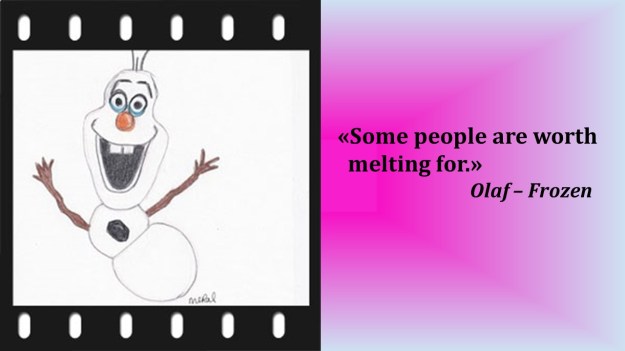
A full 70% of jobs are found through networking, and 40% of job seekers say they found their dream job through a personal connection.
So, building a strong network of connections is crucial to career success.
Build your network way before you need it.
Make networking a part of your everyday routine, rather than relying on it only when you are desperate.
There are always new people to meet and relationships to deepen.
Give before you take!
A “How can I help you?”- attitude builds trust into any relationship. It shows you care about a person and that you are backing your caring up with concrete action.
As Adam Grant, professor at Wharton and author of Give and Take has found, the people who give more than they take go further and experience more success.

The mentor-mentee relationship between Billy and Betsy transformed into a buddy relationship and is working out very well. Billy and Betsy are happy that they are able to support each other.


(Click on the pictures to see them in full size) Continue reading

Femsy finds it uncomfortable to deal with Billy, the most experienced and best performing Regional Sales Supervisor within her team.


(Click on the pictures to see them in full size) Continue reading


Just yesterday, I came across a Harvard Business Review article titled “Great Leaders Embrace Office Politics”. Written by Michael Wenderoth, the article describes how, in the real world, our success is determined less by merit and more by perceptions and political skills. Michael’s writing is pragmatic and draws insights from top executives’ actual experiences, even his own. It also reminded me of the many warnings I have received about playing the office politics game. “It is there in every office. You cannot eliminate it, so you might as well play it,” a number of colleagues, relatives and friends have told me so over the years. Continue reading

Reviewed by Femflection
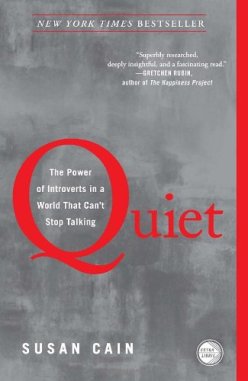
At least one-third of the people we know are introverts. If you aren’t one yourself, you work with one, or you’re the partner or parent of one.
Introverts prefer listening to speaking; innovate and create but dislike self-promotion and favor working on their own over working in teams.
Susan Cain, a former Wall Street lawyer, has been researching and writing about the subject for years. In “Quiet”, she looks at how our lives are shaped by personality. Continue reading


Reviewed by Femflection
Phyllis Chesler (born October 1, 1940) is an American writer, psychotherapist, and professor emerita of psychology and women’s studies at the College of Staten Island (CUNY). She is known as a feminist psychologist, and is the author of 16 books, including the best-seller Women and Madness (1972). Chesler has written on topics such as gender, mental illness, divorce and child custody, surrogacy, second-wave feminism, pornography, prostitution, incest, and violence against women. Continue reading


According to a 2010 study in the journal Psychological Science, “women have a lower threshold for what constitutes offensive behavior,” and hence are more likely to see a need for an apology in everyday situations.
Women apologize more, and they seem to do so to be compliant and empathetic.
Should women “man up?”
Could apologizing be holding women back at work?
View one:
Phrases like the above litter your speech, and each time you use one, you weaken your own voice. When you say what you mean in a direct, straightforward manner, you’ll be heard, understood and respected.
Knowing how to communicate with confidence sends the message that you are self-assured, proud of your skills, and comfortable in expressing your ideas.
When you stop saying sorry, you allow yourself to grow into the most confident version of yourself.
View two:
Ann Friedman believes it’s up to society to change the sorry game and wrote a story that followed Crosley’s, aptly titled, “Can We Just, Like, Get Over the Way Women Talk?”. She believes women shouldn’t be forced to “question [their] voice.” If all women were to change their speech patterns to fit a prescribed, “powerful” norm, our cadence “would lose the casual, friendly tone we wanted it to have and its special feeling of intimacy…it wouldn’t be ours anymore.”
My view:
There is power in empathy. Apologizing isn’t what keeps women out of high-powered jobs they deserve. It’s not the “sorry” that’s the problem. It’s the sexism.

Reviewed by Femflection
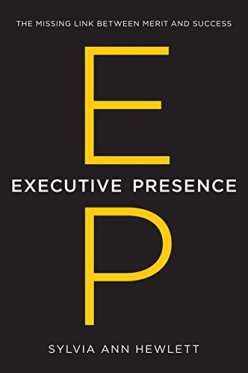
Sylvia Ann Hewlett is the founding president of the Center for Talent Innovation, a Manhattan-based think tank where she chairs a task force of eighty-two multinational companies focused on fully realising the new streams of labor in the global marketplace.
Back Cover Summary:
This book is immensely practical. Hewlett teases out tactics that can help you raise your game and close the gap between merit and success. The author offers the unvarnished advice you won’t get from supportive friends and tackles head-on such touchy subjects as too-tight clothing and too-shrill voices. She shows how the standards for EP vary for men, women, multicultural, and LGBT employees, and she shares how to get meaningful feedback from politically correct bosses intent on avoiding the real issues.
Executive Presence is teachable. You can learn how to “show teeth” while remaining likable, and you can teach yourself how to dress appropriately while staying true to yourself. With hard facts and vivid examples, Hewlett shows you how to ace EP and fully realize your unique potential—no matter who you are, no matter where you work. Continue reading

 Help you to succeed in life and work