Monthly Archives: June 2016

Situation 13: ADVISOR/MENTOR ON CONTENT

Betsy, new in her Supervisory role, feels she can benefit from regular advise from somebody more experienced than she is. She asks Billy to act as her mentor. Billy gladly accepts this role.

(Click on the pictures to see them in full size) Continue reading

Is Gender Equality a realistic option?

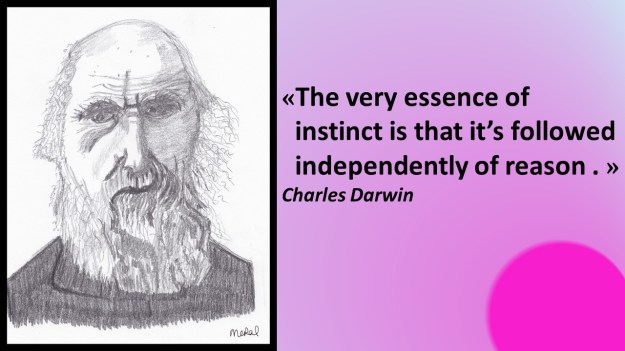
charles darwin2

Gender discrimination is the unequal treatment of someone based on sex.

In the workplace, gender discrimination is illegal if this discrimination affects the “terms or conditions of employment.”

(i.e. hiring/firing/promotions, pay, job classification, benefits)

Nevertheless, gender equality is a hot issue:

  • Just 5 percent of Fortune 500 CEO’s are women. In the U.S. only 17 percent of corporate board seats and 25 percent of senior management positions are held by women, even though women make up nearly half the workforce.
  • Despite attempts to debunk the wage gap statistic, women only earn 77 percent of what men earn for the same job or amount of work. At this rate, it could take a full 45 years before the wage gap disappears.

We have stereotypes about what constitutes leadership, and it is much aligned with our stereotypes about who men are and who women are.

When we think about how leadership is defined, we tend to think more naturally about men as leaders than women.

Not surprisingly, men are expected to be confident, opinionated and assertive, while women are expected to be nurturing, compassionate and passive.

Women therefore are not top-of-mind when we think about leadership, which hinders the ability to move ahead toward gender diversity and equality.

Unless we as women play a major role in abolishing gender stereotypes, gender equality will never be a true option.

Source: http://www.kornferry.com/institute/second-generation-gender-bias

Anja Uitdehaag

Is It OK To Put Yourself First?

by Mariska van Beek

Do you allow yourself to put yourself first? People often get quiet when I ask this question.

They confuse putting themselves first with being selfish. What they don’t realise is that when you allow yourself to choose for yourself, it means you take good care of yourself. Which is such a great thing to do and such a great thing to teach your children as well as your employees. It makes us independent, stable people. Being able to cope in life. Being able to love yourself as well as others. Continue reading

Phyllis Chesler, “Woman’s Inhumanity to Woman”

51k1jaqijxl


Reviewed by Femflection

Phyllis Chesler (born October 1, 1940) is an American writer, psychotherapist, and professor emerita of psychology and women’s studies at the College of Staten Island (CUNY). She is known as a feminist psychologist, and is the author of 16 books, including the best-seller Women and Madness (1972). Chesler has written on topics such as gender, mental illness, divorce and child custody, surrogacy, second-wave feminism, pornography, prostitution, incest, and violence against women. Continue reading

Situation 12: TASK OVERLOAD

Femsy overloads Betsy with tasks that are not in her job description. Betsy decides to address this in a face-to-face conversation with Femsy to bring clarity to the situation.

(Click on the pictures to see them in full size) Continue reading

SORRY!

carl jung1

According to a 2010 study in the journal Psychological Science, “women have a lower threshold for what constitutes offensive behavior,” and hence are more likely to see a need for an apology in everyday situations.

Women apologize more, and they seem to do so to be compliant and empathetic.

Should women “man up?”

Could apologizing be holding women back at work?

View one:

  • “Excuse me, may I ask…”
  • “I might be wrong, but …”
  • “I don’t know, but…”

Phrases like the above litter your speech, and each time you use one, you weaken your own voice. When you say what you mean in a direct, straightforward manner, you’ll be heard, understood and respected.

Knowing how to communicate with confidence sends the message that you are self-assured, proud of your skills, and comfortable in expressing your ideas.

When you stop saying sorry, you allow yourself to grow into the most confident version of yourself.

View two:

Ann Friedman believes it’s up to society to change the sorry game and wrote a story that followed Crosley’s, aptly titled, “Can We Just, Like, Get Over the Way Women Talk?”. She believes women shouldn’t be forced to “question [their] voice.” If all women were to change their speech patterns to fit a prescribed, “powerful” norm, our cadence “would lose the casual, friendly tone we wanted it to have and its special feeling of intimacy…it wouldn’t be ours anymore.”

My view:

There is power in empathy. Apologizing isn’t what keeps women out of high-powered jobs they deserve. It’s not the “sorry” that’s the problem. It’s the sexism.

Anja Uitdehaag

Effective Women Leadership: Imitating or Being Authentic?

by Tatiana Bessmertnaya

Have you ever met these types of business women who copy paste men’s style?

In our business lives we see many examples of how former subordinates begin to imitate their former boss’ style taking them as a role model for successful and effective management. Or business women demonstrate men’s styles, acting in a certain way to meet the norms set by others within a male-dominated business culture.

What is the reason behind the choice to imitate men’s styles? Is “copy paste” just the easiest way? Is it the thinking of being less competent than men? Is it lack of self-confidence to express who they are and to embrace a wider range of leadership characteristics needed to run an organisation effectively? Is it women’s fear to integrate more aspects of herself into an existing community? Or is it a strong inner setting that to be successful in the business world you should act and be like a man? Continue reading