Author Archives: Femflection

SORRY!

carl jung1

According to a 2010 study in the journal Psychological Science, “women have a lower threshold for what constitutes offensive behavior,” and hence are more likely to see a need for an apology in everyday situations.

Women apologize more, and they seem to do so to be compliant and empathetic.

Should women “man up?”

Could apologizing be holding women back at work?

View one:

  • “Excuse me, may I ask…”
  • “I might be wrong, but …”
  • “I don’t know, but…”

Phrases like the above litter your speech, and each time you use one, you weaken your own voice. When you say what you mean in a direct, straightforward manner, you’ll be heard, understood and respected.

Knowing how to communicate with confidence sends the message that you are self-assured, proud of your skills, and comfortable in expressing your ideas.

When you stop saying sorry, you allow yourself to grow into the most confident version of yourself.

View two:

Ann Friedman believes it’s up to society to change the sorry game and wrote a story that followed Crosley’s, aptly titled, “Can We Just, Like, Get Over the Way Women Talk?”. She believes women shouldn’t be forced to “question [their] voice.” If all women were to change their speech patterns to fit a prescribed, “powerful” norm, our cadence “would lose the casual, friendly tone we wanted it to have and its special feeling of intimacy…it wouldn’t be ours anymore.”

My view:

There is power in empathy. Apologizing isn’t what keeps women out of high-powered jobs they deserve. It’s not the “sorry” that’s the problem. It’s the sexism.

Anja Uitdehaag

Effective Women Leadership: Imitating or Being Authentic?

by Tatiana Bessmertnaya

Have you ever met these types of business women who copy paste men’s style?

In our business lives we see many examples of how former subordinates begin to imitate their former boss’ style taking them as a role model for successful and effective management. Or business women demonstrate men’s styles, acting in a certain way to meet the norms set by others within a male-dominated business culture.

What is the reason behind the choice to imitate men’s styles? Is “copy paste” just the easiest way? Is it the thinking of being less competent than men? Is it lack of self-confidence to express who they are and to embrace a wider range of leadership characteristics needed to run an organisation effectively? Is it women’s fear to integrate more aspects of herself into an existing community? Or is it a strong inner setting that to be successful in the business world you should act and be like a man? Continue reading

Brendon Burchard, “The Motivation Manifesto”

51aw8xtszyl


Reviewed by Femflection

Brendon Burchard is a #1 New York Times bestselling author whose books include The Charge, The Millionaire Messenger, and Life’s Golden Ticket. Continue reading

Situation 11: STEALING YOUR IDEA IN A MEETING

Femsy brings up a good idea in a meeting but unfortunately nobody picks up on it. Yet, 10 minutes later Mansy repeats the same idea and the Boss jumps at his idea and is praising him for his brilliance. Frustrating!

(Click on the pictures to see them in full size) Continue reading

Six Habits Which Won’t Make Anybody Happy

by Marcel van Wiggen

On a regular basis I am meeting people who have become experts in feeling miserable, frustrated or even anxious. Whatever happens, their very first reaction is negative. This does not happen consciously or deliberately. They have, over time, unconsciously, trained themselves in becoming outstanding in negative thinking.

It does not matter who you are and how you perceive life, the destructive habits below will make you feel bad. So, make sure you are not picking up these habits! Continue reading

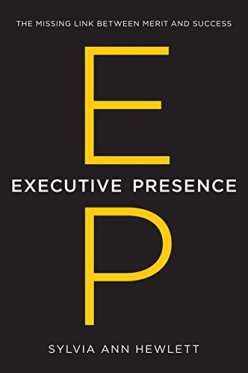
Sylvia Ann Hewlett, “Executive Presence: The Missing Link Between Merit and Success”

41p3h7bzjhl


Reviewed by Femflection

Sylvia Ann Hewlett is the founding president of the Center for Talent Innovation, a Manhattan-based think tank where she chairs a task force of eighty-two multinational companies focused on fully realising the new streams of labor in the global marketplace.

Back Cover Summary:

This book is immensely practical. Hewlett teases out tactics that can help you raise your game and close the gap between merit and success. The author offers the unvarnished advice you won’t get from supportive friends and tackles head-on such touchy subjects as too-tight clothing and too-shrill voices. She shows how the standards for EP vary for men, women, multicultural, and LGBT employees, and she shares how to get meaningful feedback from politically correct bosses intent on avoiding the real issues.

Executive Presence is teachable. You can learn how to “show teeth” while remaining likable, and you can teach yourself how to dress appropriately while staying true to yourself. With hard facts and vivid examples, Hewlett shows you how to ace EP and fully realize your unique potential—no matter who you are, no matter where you work. Continue reading

Situation 10: WORKING HARD

Femsy strongly believes in the motto: “Work hard and you will get noticed and rewarded.” She makes long hours to get the job done. She is missing out on the “social talks” in order not to waste her time.

(Click on the pictures to see them in full size)

Continue reading

WHAT’S IN THE NEWS?

Debasish Mridha

We read and hear day in and day out the same bleak news on violence, wars, death, corruption, starvation and so on. I wonder if this is the only means that the media has to market it’s product and to gain that competitive edge? Perhaps this is the chicken or the egg question. Is it human nature that requires this type of sensationalism or have we been conditioned to react with huge interest to such?

Mine Batiyel

Putting Your Own Needs First

by Anja Uitdehaag

“Women lose sight of their goals by taking on extra responsibilities. We are virtual responsibility magnets. We don’t make these decisions consciously or deliberately but out of fear that if we don’t act on a need it will never get resolved. But we fail to realize that once we become responsible for something we might be responsible for it forever.” – Pat Heim; Hardball for Women

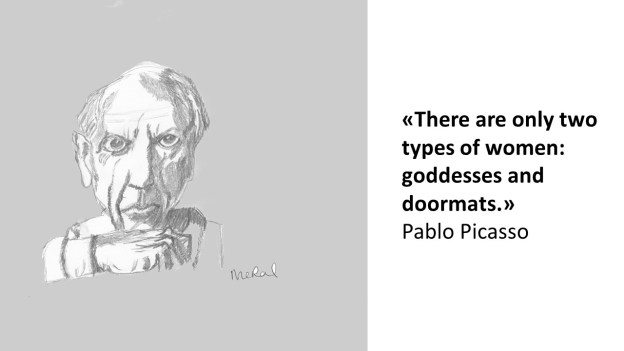
According to Pablo Picasso “There are only two types of women – goddesses and doormats”.

Let’s have a closer look at the differences: Continue reading

Brené Brown, “The Gifts of Imperfection: Let Go of Who You Think You’re Supposed to Be and Embrace Who You Are”

51eqedfzajl


Reviewed by Femflection

Dr. Brené Brown is a research professor at the University of Houston Graduate College of Social Work. She has spent many years studying vulnerability, courage, worthiness, and shame.

Brené is also the Founder and CEO of The Daring Way – an organization that brings her work on vulnerability, courage, shame and worthiness to organizations, schools, communities, and families.

Brené’s 2010 TEDx Houston talk, The Power of Vulnerability, is one of the top five most viewed TED talks in the world, with over 19 million viewers. Continue reading