Tag Archives: Behaviour

I Am Feeling Vulnerable!

by Anja Uitdehaag

At work, we are programmed to act as if we know what we are doing, even in moments when we have no clue.

Managers and employees often act from the shared belief that being vulnerable at work is not acceptable, that it will result in perceptions of incompetence, lack of confidence and consequently a poor performance review.

We are often afraid to be vulnerable because it is associated with weakness. However it is a commonly experienced human feeling. None of us are exempt from feeling vulnerable at times. Continue reading

When Office Politics Are At Odds With Your Personal Values

by River Ho Rathore

Just yesterday, I came across a Harvard Business Review article titled “Great Leaders Embrace Office Politics. Written by Michael Wenderoth, the article describes how, in the real world, our success is determined less by merit and more by perceptions and political skills. Michael’s writing is pragmatic and draws insights from top executives’ actual experiences, even his own. It also reminded me of the many warnings I have received about playing the office politics game. “It is there in every office. You cannot eliminate it, so you might as well play it,”  a number of colleagues, relatives and friends have told me so over the years. Continue reading

Situation 15: OFFICE RUDENESS

Femsy shares the office with Mansy, which is not easy for her. Mansy is often not greeting her in the morning, is not or hardly acknowledging her presence in the office, talks too loud on the telephone and is distracting Femsy from concentrating on her job by asking questions or making comments/jokes whenever it suits him.

(Click on the pictures to see them in full size) Continue reading

Everything isn’t about you

Elsa – Frozen

When something upsetting happens at work, a woman is more likely to take it personally than her male counterpart.

Most advice given for handling such a situation would be “It’s just business, don’t take it personally.”

For a long time this kind of advice used to make me even angrier. Not to take things personally? It was personal!

Today? – Though I’m far from being fully detached, I’ve come a long way compared to where I once was.

There’s nothing like growing up in a large competitive family and a global career in a male dominated environment to teach you how to not take things personally.

When you take things personally you give others more power over you than they ever should be allowed to have. You are allowing someone to question what you feel, believe and who you are. It keeps you tied to someone else and can even make you feel like a victim.

The biggest benefits of not taking things personally are self-awareness, self worth and clarity.

Knowing and truly feeling that only you can dictate whether or not you’re on track or whether or not you’re successful is a reward in and of it self.

As Eleanor Roosevelt said, “No one can make you feel inferior without your permission.”

Anja Uitdehaag

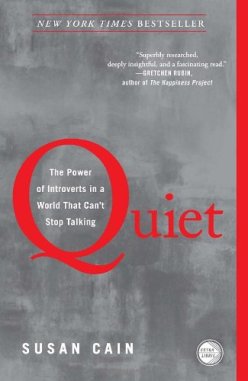
Susan Cain, “Quiet: The Power of Introverts in a World That Can’t Stop Talking”

41m0n7iicsl


Reviewed by Femflection

At least one-third of the people we know are introverts. If you aren’t one yourself, you work with one, or you’re the partner or parent of one.

Introverts prefer listening to speaking; innovate and create but dislike self-promotion and favor working on their own over working in teams.

Susan Cain, a former Wall Street lawyer, has been researching and writing about the subject for years. In “Quiet”, she looks at how our lives are shaped by personality. Continue reading

Situation 14: INAPPROPRIATE DRESS

Mian wears skirts that are way too short. Femsy calls her in for a face-to-face- meeting.

(Click on the pictures to see them in full size) Continue reading

Don’t believe everything you think

by Anja Uitdehaag

A couple of weeks ago, we had a celebration dinner together with an ex-colleague. She got, in my opinion, a very well deserved promotion since she is incredibly smart, hardworking, and talented. I truly believe in her abilities and her values. I see it, I hear it and I feel it every time I talk to her.

I was surprised to hear that she doesn’t always feel the same.

She expressed the fear of being “found out” one day to be lacking the skills and intelligence she is perceived to have.

At the same time I felt like watching myself in a mirror. I also tend to diminish the significance of my achievements and attribute them to luck, a helping hand or other forces outside my control, rather than my own effort, dedication, and even intelligence. Continue reading

Is Gender Equality a realistic option?

charles darwin2

Gender discrimination is the unequal treatment of someone based on sex.

In the workplace, gender discrimination is illegal if this discrimination affects the “terms or conditions of employment.”

(i.e. hiring/firing/promotions, pay, job classification, benefits)

Nevertheless, gender equality is a hot issue:

  • Just 5 percent of Fortune 500 CEO’s are women. In the U.S. only 17 percent of corporate board seats and 25 percent of senior management positions are held by women, even though women make up nearly half the workforce.
  • Despite attempts to debunk the wage gap statistic, women only earn 77 percent of what men earn for the same job or amount of work. At this rate, it could take a full 45 years before the wage gap disappears.

We have stereotypes about what constitutes leadership, and it is much aligned with our stereotypes about who men are and who women are.

When we think about how leadership is defined, we tend to think more naturally about men as leaders than women.

Not surprisingly, men are expected to be confident, opinionated and assertive, while women are expected to be nurturing, compassionate and passive.

Women therefore are not top-of-mind when we think about leadership, which hinders the ability to move ahead toward gender diversity and equality.

Unless we as women play a major role in abolishing gender stereotypes, gender equality will never be a true option.

Source: http://www.kornferry.com/institute/second-generation-gender-bias

Anja Uitdehaag

Is It OK To Put Yourself First?

by Mariska van Beek

Do you allow yourself to put yourself first? People often get quiet when I ask this question.

They confuse putting themselves first with being selfish. What they don’t realise is that when you allow yourself to choose for yourself, it means you take good care of yourself. Which is such a great thing to do and such a great thing to teach your children as well as your employees. It makes us independent, stable people. Being able to cope in life. Being able to love yourself as well as others. Continue reading

Phyllis Chesler, “Woman’s Inhumanity to Woman”

51k1jaqijxl


Reviewed by Femflection

Phyllis Chesler (born October 1, 1940) is an American writer, psychotherapist, and professor emerita of psychology and women’s studies at the College of Staten Island (CUNY). She is known as a feminist psychologist, and is the author of 16 books, including the best-seller Women and Madness (1972). Chesler has written on topics such as gender, mental illness, divorce and child custody, surrogacy, second-wave feminism, pornography, prostitution, incest, and violence against women. Continue reading