Tag Archives: Inspiration

JUST BE YOURSELF

love your life clipboard decor

Photo by Natasha Fernandez on Pexels.com

 “Nothing important, or meaningful, or beautiful, or interesting, or great, ever came out of imitations. What is really hard, and really amazing, is giving up on being perfect and beginning the work of becoming yourself. More difficult because there is no zeitgeist to read, no template to follow, no mask to wear. Terrifying, actually, because it requires you to set aside what your friends expect, what your family and your co-workers demand, what your acquaintances require, to set aside the messages this culture sends, through its advertising, its entertainment, its disdain, and its disapproval, about how you should behave.” – Anna Quindlen

Our true self is who we really are when we let go of all of the stories, labels, and judgments that we have placed upon ourselves. It is who we naturally are without the masks and pretentiousness.

For me, being my self means being honest and genuine. It means stop pretending to be somebody I am not, putting on a show and trying to fit in. It also means deciding what I really want from life, standing up for what I believe in, and following my own value system and common sense.

To be true to yourself takes courage. It requires you to be introspective, sincere, open-minded and fair. It also requires you to take the risk of learning something about yourself as well as to take responsibility for yourself.

When you are being yourself, it is easier to see what you want out of life and what is truly important to you.

Only by being true to yourself you can own your life.

Your story, our platform: If you’ve got a story and would like to share it with other Femflectors, please let us know. Femflection is all about transferring learnings to help others, be they big or subtle. We want to connect with your feelings, your learnings, your reflections or your hopes for the future – in blog or interview format. Express yourself here. Get in touch with us via anja.uitdehaag@femflection.com

For more content visit our website http://www.femflection.com

Why Your Inner Critic Is Your Worst Enemy – And What To Do About It

IMG_0035by: Bevan Rees, Koach.net

Why Your Inner Critic Is Your Worst Enemy – And What To Do About It
A long time ago, when most of our species were living in caves, survival was generally more difficult than it is today. So, responding to the almost constant threat of death at the teeth of wild animals, the human brain made some intelligent adjustments. It began to prioritise negative judgements, because they kept us alive longer. Let’s imagine, for example, that your troglodyte ancestor stepped out of the cave one morning to stretch his legs, and saw a brown shape behind a nearby bush. If he thought that the shape was a rock, but it turned out to be a sabre-toothed tiger, it would likely be the last mistake he ever made. But, if he thought the shape was a tiger and it turned out to be a rock, he might be a bit embarrassed, but he could make the same mistake a hundred times and not suffer any major consequences. Which is why humans developed the negativity bias: the brain’s tendency to react more strongly to negative stimuli, or even the expectation of negative stimuli. It’s why the amygdala – the part of the brain responsible for managing the fight-or-flight response – dedicates two thirds of its neurons to negative experiences. And it accounts for why we are so adept at fearing the worst, despite the lack of concrete evidence for doing so. In Mark Twain’s words, ‘I am an old man and have known a great many troubles, but most of them never happened.’
For millennia, this programming did an amazing job of preserving human life, but as civilized life has become safer and more predictable, it is no longer as necessary. Yet, the negativity bias prevails, as does the voice of the negativity bias: the inner critic. The inner critic’s job is to talk you out of risk and threat, even if that threat is only failure or embarrassment rather than death. We all know it because we all have one. It’s the voice that tells you that you’re crazy to apply for that new job post, or start a new business, or move to a new country. It’s the voice that tells you that you’re not intelligent enough, qualified enough or brave enough. And it’s powerful. As Ilene Gregorian, mindfulness trainer for US Special Forces, says, ‘You can take yourself down with your thoughts faster than any enemy can.’
Overcoming the inner critic and its seeds of self-doubt is one of the biggest challenges on the path to self-development, and one of the earliest you’ll encounter. Though it can be subtle, it usually kicks in as soon as you try to shift from the status quo and is a big contributor to a resistance to change. Many strategies for dealing with it are combative and rely on willpower to defeat the repetitive self-assassination (ignore that voice in your head!). But this is often a superficial approach that fails to address the underlying causes, because even though we all have an inner critic, the degree to which it affects our lives varies from person to person, and time to time. It peaks when we are feeling unconfident and is quietest when we feel success, and is a function of the unique psycho-emotional matrix of every individual. So, what can be done about it? Here are 3 suggestions:

Meditate
Yes, you’ve heard this one before, because everyone seems to be punting the virtues of meditation. And that’s because it works. The more research is done on meditation – especially mindfulness-based meditation – the more evidence there is for its multitudinous benefits. Among them is a deeper familiarity with the habitual processes of the mind. Through even 10 minutes of consistent daily mindfulness practice, you will become acquainted with the seemingly endless internal chatter that fills your mind, as well as the quiet space that holds it. You will be able to identify the voice of the inner critic and view it as an object of your awareness, allowing you to see it for what it is: a limited survival guide trying to keep you safe, rather than a speaker of the truth. Creating this distance and perspective during meditation grants progressively stronger ability to do the same in the normal run of your day, allowing you to make more intelligent choices. To get started in meditation, join the worldwide community, download the free app and use the guided meditations at Insight Timer, or sign up for Headspace’s fantastically accessible meditation program.

Ask for help
One of the problems with the inner critic is that it is so difficult to catch in action. It could be the primary reason you are blocked in trying to transform a particular aspect of your life, but you might not be aware of it. A conversation across the kitchen table with a friend or partner could make you feel better and see the way you’ve been sabotaging yourself, but if you’re feeling genuinely stuck you might need to enlist some professional help. This is the service provided by most coaches and mentors, though for stalled growth due to longstanding psychological difficulties it is advisable to see a therapist too. Overcoming your own internal monologue requires insight and awareness, as well as action-oriented plans and practices – coaching can help with both.

Be compassionate
When things are challenging and stress is high, our inner critic is usually in full flow, making it very clear why the world is bad and everything is going to go wrong. At such times, compassion may seem like a strange attitude to prescribe, but it is the antidote to an over-activated negativity bias. The 2016 State of The Heart Report – a global EQ study of 100,000 people in 126 countries in different professional sectors, revealed that emotional intelligence, empathy and compassion are on the decline. A significant factor in these findings is the global rise in stress levels. It makes intuitive sense that the more stressed we are, the less compassionate we are. But this relationship also works in reverse: the more compassionate we are, the less stressed and anxious we feel. Compassion, particularly self-compassion, can be trained, and allows us to integrate anxiety or stress while remaining more open to new experience. In practical terms, this means acknowledging the inner critic and accepting it, while still being positively engaged in your life. As a start, use Dr Kristin Neff’s 5-minute self-compassion break to connect with this powerful approach.


Visit Koach.net to discover how our coaches can help you find clarity at work and at home, and can lead you to a more successful and fulfilled you.

Your story, our platform: If you’ve got a story and would like to share it with other Femflectors, please let us know. Femflection is all about transferring learnings to help others, be they big or subtle. We want to connect with your feelings, your learnings, your reflections or your hopes for the future – in blog or interview format. Express yourself here. Get in touch with us via anja.uitdehaag@femflection.com

For more content visit our website http://www.femflection.com



Do you know what you don’t like about yourself in a conflict situation?

8

“In business, when two people always agree, one of them is irrelevant” – William Wrigley.

Conflict is a normal part of any healthy relationship. Nobody can be expected to agree on everything all the time.  Make conflict resolution the priority rather than winning or being right. Maintaining and strengthening the relationship should always be the first priority. Say what must be said in a way that is not damaging the relationship. Pride does not belong at work!

Suggestions for managing and resolving conflict:

  • If you have a problem explain your thinking and ask the other party to explain his/her thinking. Focus only on the issue, not on the person. Separate facts from opinions and assumptions;
  • Take the time to really define the problem: describe the problem and its impact, avoid direct blaming remarks, make the problem concrete and specific;
  • Listen for what is felt as well as said. Let the other person finish, don’t interrupt, ask clarifying questions, acknowledge the other person’s feelings and show respect;
  • Use contrasting technique if applicable: “I don’t want to appear that I haven’t heard what you said, because I have. I do want to express a different way to look at the situation”;
  • Let the person know when what you are about to say is difficult: “this is a bit difficult for me to say, but I do want to let you know how I see the situation”;
    If you get emotional, pause and pull yourself together;
  • Focus on the common goals, priorities and problems on both sides. Find wins on both sides, give in on little points, show respect;
  • Keep the open conflict points as concrete and specific as possible (the more abstract it gets, the more unmanageable it is);
  • If you cannot agree on a solution on all conflict points, agree on a procedure to move forward;
  • Know when to let go of something: agree to disagree, disengage and move on;
    If needed, take the situation to the upper level for further calibration or decision taking.
    Other learning suggestions:

We often don’t like in others what we don’t want to see in ourselves. Are you up for a challenge? Write down five traits that really bug you when you see them in others. Be aware that these traits are your “hot buttons”.

Your story, our platform: If you’ve got a story and would like to share it with other Femflectors, please let us know. Femflection is all about transferring learnings to help others, be they big or subtle. We want to connect with your feelings, your learnings, your reflections or your hopes for the future – in blog or interview format. Express yourself here. Get in touch with us via anja.uitdehaag@femflection.com

For more content visit our website http://www.femflection.com


Lindsay’s In Business: PART 46: Another mountain range

IMG_0040What happens when you realise your path is entrepreneurship rather than employment? Lindsay takes up the challenge and shares an account of her journey as it unfolds…

I can NOT believe that just the second you think you’ve scaled the mountain and can relax at the top, you look over the ridge only to see yet ANOTHER, higher mountain top to climb. And you know that the higher you go, the better it will be, so the feelings are a mixed sense of incredulity, exasperation, and energy to take on a fresher challenge.
I’ve just been to London again – it always pays to meet up with experts, people in related fields. I get something out of every meeting and this time I met with people with experience in learning, HR, philosophy, and leadership. Referrals, people I used to work with, people I met at conferences…

Continue reading

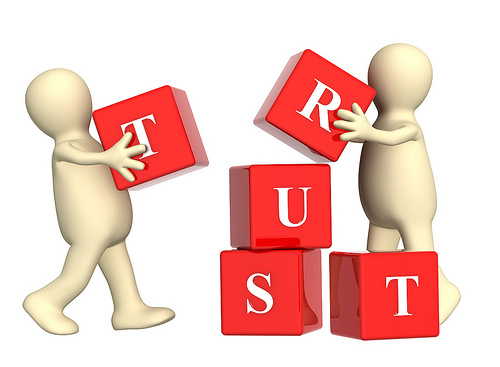
The power of TRUST – trust in the workplace.

Trust

By: Angie Falls

While reflecting on the day during the weekend I could not help myself to pick up my mobile phone and check the office mail. The first glimpse was an email from my new manager. She turned out to be a micromanager who can’t function without being part of everything on a very detailed level. It is so exhausting and it drains all my energy.

I wondered why this was the case. What could I do to make it a more agreeable situation and work relation? I feel that one of the most important things a manager can do is to trust team members.

Continue reading

Lindsay’s In Business: PART 44: We’re only human after all

IMG_0056What happens when you realise your path is entrepreneurship rather than employment? Lindsay takes up the challenge and shares an account of her journey as it unfolds…

It’s 8pm and I’m at Copenhagen airport waiting for my flight back to The Netherlands. For the past two days, I’ve been at a communications conference in an amazing old University building. All considered, it was a worthwhile experience. I presented at my best on the first morning – “What is Social Alignment and How It Links to Performance”. Today I got two solid leads. Very pleased.

The other presenters talked about communicating in change, about how to facilitate a virtual group, about psychology, and about all sorts of other stuff. I find the stuff about how humans work most interesting. Apparently, the average person makes around 35,000 decisions every day. Great stat! (Trying to find out where it came from). And I really liked a guy called Antoni Lacinai – great speaker – who argues that the analogue world is more important than the digital world. His piece included this (paraphrased):

Continue reading

How do you know when you need a coach?

There’s a fine line between ‘I’m not having a good day, I’ll be ok tomorrow’ and ‘I don’t think I can meet my goals without expert guidance’. Knowing at what point to seek professional support through the help of a coach is crucial.

Coaching is for those who recognise they have wandered off their path and need to realign themselves again – be it in business, life or relationships. It is not counselling, mentoring, therapy or training. What a coach does is listen to your aspirations and goals, recognise the obstacles that are standing in your way, and provide actionable solutions to enable you to fulfil your ambitions in a measurable, simple and successful way.

Seeking a coach demonstrates that you wish to improve and that you recognise that you need an expert to guide you. Every great sports person has a coach to thank for pushing them, motivating them, encouraging them and supporting them in their journey…life and business coaches do exactly that too.

So how do you know when you need a coach?

According to Alexis Meads, there are ten tell-tale signs that you need a coach in your life.

1. Your friends and family are tired of listening to you

It’s wonderful to have a support network around you, but don’t exhaust your friend’s kindness by going over the same thing every time you meet them. A coach is a professional listener who isn’t worried about telling you how it is – but not only will they listen, they will also give you a concrete plan to follow in order to overcome the struggles you are facing.

2. You over-analyze everything

There is such a thing as over-thinking things and if your mind is full of questions and no answers then it’s time to seek professional help from someone that can untangle the tangled knot of questions inside your mind.

3. Your relationship problems are making you ill

Mental strain has a physical affect on the body. If you aren’t happy with your relationship then you need to find a way to handle that – and ignoring it or repeating the same mistakes won’t help. Through the help of a coach you can find clarity and confidence again.

4. You’re not happy with your weight

Health and life coaches can advise on weight loss, fitness, nutrition and exercise plans but most of all they can give you the motivation you need to stick to your plan and reach your goals. Everyone knows that having someone by your side when trying to get fit is easier than going at it alone!

5. You’ve lost your identity

Whether you’ve recently moved abroad, had children, changed as you’ve got older or inexplicably lost confidence – coaching can help you feel like the old you again. Or alternatively, help you reinvent a new happier and more positive you.

6. You have Imposter Syndrome

On the outside you’re rocking it, but on the inside you’re crippled with self doubt, insecurity, worry and anxiety. A good coach can alleviate that stress and empower you with the skills to feel just as good on the inside as people believe you are on the outside.

7. You’re not at the point in your career you thought you would be

It’s nobody’s fault but yours, but you don’t know where you’re going wrong. Do you lack confidence to seek alternative employment? Or do you need to improve on your leadership skills and communication techniques? Our coaches will recognise the obstacles standing in the way of your success and give you the tools to ensure that you reach your career goals.

8. You’re stuck

Your life is in a rut. You’re bored. You’re wondering if there’s anything else out there for you or if this monotonous treadmill you call life is as good as it gets. Don’t worry, it can always get better, you just need a push in the right direction by a life coach that will understand your concerns and show you the light.

9. You have no social life

It’s not just the work and family life balance that a coach can help you wish, they can also assist with helping you find the all important ‘me’ time. Hobbies, mindfulness, interests and fun are just as important as family and earning a wage.

10. You worry about what others think

This is all too common in an age of over-sharing, but this form of thinking can be paralysing and in the long term affect all areas of your life. In order to reach your goals you need to be confident, fearless and positive. Coaching can help you value your self worth while providing ways for you to protect yourself from the opinions of others.

So if any of these points sound like you then you may benefit from coaching. Coaching is not a last resort, far from it. Coaching is a way of reigniting that internal spark that makes you want to be a better you. So get over your first obstacle and get in touch – we may just change your life.


Visit Koach.net to discover how our coaches can help you find clarity at work and at home, and can lead you to a more successful and fulfilled you.

Your story, our platform: If you’ve got a story and would like to share it with other Femflectors, please let us know. Femflection is all about transferring learnings to help others, be they big or subtle. We want to connect with your feelings, your learnings, your reflections or your hopes for the future – in blog or interview format. Express yourself here. Get in touch with us via anja.uitdehaag@femflection.com

For more content visit our website http://www.femflection.com

Lindsay’s In Business: PART 43: On values

IMG_0053

What happens when you realise your path is entrepreneurship rather than employment? Lindsay takes up the challenge and shares an account of her journey as it unfolds… 
For a long time, I’ve had my doubts about ‘values’.

  • In terms of behaviours, don’t people use different values under different circumstances?
  • How can an organization say they want people to ‘take on’ certain values when we all have our own?
  • How do values relate to personality?

I was interested in this because of the design of Mirror Mirror. Was I missing something?

Continue reading

Self-Reflection my greatest asset

self-discovery-BXKK3R

By: Angie Falls

Just the other day I came across an article about Winston Churchill. The part that stuck with me;

Never give in, never give in, never, never, never, never — in nothing, great or small, large or petty — never give in except to convictions of honor and good sense.” —Winston Churchill

The focus was on Winston Churchill being stubborn and determined.

Continue reading

Lindsay’s In Business: PART 42: It’s all about the sell 

IMG_0043

What happens when you realise your path is entrepreneurship rather than employment? Lindsay takes up the challenge and shares an account of her journey as it unfolds… 


It all comes down to THE SELL:

  • A clear product
  • With clear benefits
  • And a clear USP – how it differentiates from the rest.

I’ve had a few pitch meetings recently. Everyone interested, everyone keen – orders not yet placed.

This morning I had a call with a very wise and successful Irish lady who was the queen of online learning in her day.

She told me that it’s a HUGELY competitive market. That she knows people who fall in love with their ideas, thinking they’re different from all the rest, and end up quitting 4 years later.

Yes, we know it’s competitive. (I’m starting to feel the cold shower).

Continue reading