Tag Archives: Femflection

Get an attitude

woman showing muscles

Photo by Tim Savage on Pexels.com

I tried to be a boy

I tried to be a girl

I tried to be a mess

I tried to be the best

I guess I got it wrong

(Madonna)

The person we bully the most is ourselves. This already starts at the age of six! We are in the midst of a self bullying epidemic.

Most of us are unaware that the self sabotaging actions we take, the negative thoughts we think and the pressure we feel is coming from ourselves. Do you sometimes get down on yourself for not measuring up to the expectations you or others have for your body, career, children, finances or relationships? Do you feel you are not accomplishing enough, no matter how? Do you play it safe and small? Do you feel like the whole world is on your shoulders? Do you feel never good enough – always average?

I have never met an average woman. Not a single one!

What I have met though, is too many women who thought they were average; who felt they were ordinary because some one, or many some-ones, taught them they were.

Self sabotage block your success by working against your own self interests.

The only limits that you face are the limits of your own ambition, talent and dedication. Acknowledge yourself. Appreciate yourself. See yourself through a more honest, more realistic lens.

Get an attitude!

Your story, our platform: If you’ve got a story and would like to share it with other Femflectors, please let us know. Femflection is all about transferring learnings to help others, be they big or subtle. We want to connect with your feelings, your learnings, your reflections or your hopes for the future – in blog or interview format. Express yourself here. Get in touch with us via anja.uitdehaag@femflection.com

For more content visit our website http://www.femflection.com


Lindsay’s In Business: PART 56. Is history repeating itself? 

think outside of the box

Photo by Kaboompics .com on Pexels.com

What happens when you realise your path is entrepreneurship rather than employment? Lindsay takes up the challenge and shares an account of her journey as it unfolds… 

Here’s how I see the journey has gone so far:

I launched a business selling a new approachto team communications / team effectiveness. The market is awash with stuff like this, but the process I have is, dare I say, revolutionary. It took a while to find a way to articulate and present the concept, and reactions in general have been positive. Within 14 months of trading, I got 3 great case studies and the process was all up and running.

Continue reading

Lateral job move

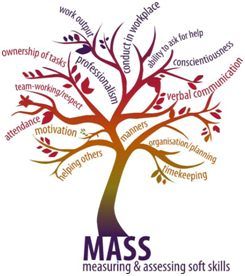
massBy: Angie Falls

Since I am already six year with the current company I decided to make a lateral job change within my organization to gain experience and to increase the potential for advancement. Often I am being asked maybe its time to move on. You have been already so long with the company. A way too traditional mindset. I am all for thinking out of the box and exploring new ideas and different mindsets.  A job in a different department offers greater responsibilities and challenges. I can stay at the same location and be transferred laterally in another area. I choose this path instead of moving on and search for a challenge in a new company.

Reflecting on this choice makes me more determined to invest in this new function. I get the opportunity to learn new disciplines in the same branch. It gives me a new perspective with my current 20 years experience. When you have spend 2 decades in a specific discipline you develop skills which extends beyond the technical knowledge. Due to globalization and fast paced technological progress  It is more and more evident that soft skills need to be enriched along the way. One of the most important soft skill is the ability to see from another perspective than your own. Empathy is a skill to be strongly illuminated. It offers us a chance to gain insight in a topic or situation from another angle. If excersized from different angles this skill will enable us to make profound decissions. Self reflection another essential soft skill which if not possesed will restrain you. The lack of these skills can decrease employee productivity. Which soft skill are desired by companies depends on the cultural fit. In my opinion ownership is one of the soft skills which I feel the majority needs to focus on. Once I got the advice which sounds like this. In your profession you are the CEO of something whatever you’re responsible for.

Taking ownership of your work means assuming responsibility for helping the organization as a whole to succeed. I invest in the outcomes of my work, implementing ways to do things better and holding myself accountable when there is a negative outcome. I analyze, find solutions and perform on those solutions. This also gives me pride in my work and energizes me. Too often I meet people who do not enjoy their profession. Have lost passion in what they do or didn’t have the passion in the beginning. When the foundation is not solid how can we expect it will flourish. There was no ground to start with.

One of my personal challenges is my strong assertive personality. Too much assertiveness can become domineering. I am working on polite assertiveness. It helps addressing problems calmly and forthrightly and not shying away from difficult or cumbersome conversations.

To conclude my favorite list of soft skills;

  • Emotional Intelligence
  • Ownership
  • Staying Calm
  • Openness to Feedback
  • Polite Assertiveness
  • Decency
  • Integrity

Putting effort on a daily basis to develop and operate based on this soft skill set.

Your story, our platform: If you’ve got a story and would like to share it with other Femflectors, please let us know. Femflection is all about transferring learnings to help others, be they big or subtle. We want to connect with your feelings, your learnings, your reflections or your hopes for the future – in blog or interview format. Express yourself here. Get in touch with us via anja.uitdehaag@femflection.com

For more content visit our website http://www.femflection.com


Lindsay’s In Business: PART 55. An emotional journey

sunset girl women photography

Photo by Adrianna Calvo on Pexels.com

What happens when you realise your path is entrepreneurship rather than employment? Lindsay takes up the challenge and shares an account of her journey as it unfolds…

It’s getting so exciting because the idea I last blogged about, to launch a free online team effectiveness test, is going to happen and who knows where it will lead! We aim to launch it in October and run it for 10 months. I’m going to get it promoted ALL OVER social media and it will disrupt the ‘command and control’ leaders when their team members initiate this without their knowledge. It could just generate some interesting leads and data – it could catch on, become shared, and reach our goal of 1,000 participating teams. Great PR stories to come!

It’s getting exciting because a prestigious management school has asked me to run a short version of Mirror Mirror for 100 of their students to teach them about teamwork and leadership, and to help them in innovation challenges with leading global organizations.

Continue reading

STOICISM

20180912_224927

By: Angie Falls

Once in a while my attention is attracted by icons in history. I strongly believe that there is always a lesson to be learned. Currently I am fascinated by Marcus Aurelius.

He was the last of the so-called FiveGoodEmperors.

He was a practitioner of Stoicism, and his untitled writing, commonly known as Meditations, is a significant source of the modern understanding of ancient Stoic philosophy.

Continue reading

WELL DONE!

light sign typography lighting

Photo by Gratisography on Pexels.com


Accepting a compliment gracefully is a challenge for many women. Somehow we have been socialised to believe there is shame in feeling good about ourselves. Such a pity!

Our biggest fear is that, by accepting the compliment we will appear arrogant.

However, when you downplay a compliment, you may feel you are showing humility,  but you may make the person who gave the compliment feel personally rejected.

Continue reading

The happiness factor


My youngest child turned eight yesterday, and the unbridled joy that poured from her on her birthday was infectious. It was an understated but close family celebration, and she reveled in being the center of attention for an entire day. From presents to cake to games to photos, my daughter smiled and laughed and danced. It occurred to me that she was happy – spontaneously, effusively happy. It also occurred to me that the difference between children and most adults I know is not principally whether they are happier or not, it is that they don’t try to be happy. Happiness is a powerful emotion. It has been associated with having a healthier heart, a stronger immune system and a longer life. But the main reason we’re attracted to it is because it feels so good. That’s the reason it is the final objective of almost the entire bookshelf of the self-help industry: stronger relationships, more money, greater sense of purpose, higher success, a more desirable job – in one way or another these make us feel happy, at least for a period of time. It is also the reason that the self-help industry is worth more than $11 billion a year in the US alone, and the global depression drug market is poised to surge to $16.80 billion by 2020. Everyone is after the happy kick, whether they find it in a book, a podcast or a pill.

This is in the context of global increases in depression and anxiety, and what seems to be a growing aversion to not feeling good. We have come to regard emotions like sadness, anger and loneliness as ‘bad’. Undoubtedly, they don’t feel great, but just like all emotions they contain information that can be used to make better decisions. Writing off ‘negative’ feelings eliminates a large portion of the human spectrum of emotions, leaving us chasing a one-dimensional ‘happy’ version of life. And the chase itself is damaging, because in our achievement-obsessed culture happiness is frequently sold as a goal that needs to be attained. If you’re not attaining it and everyone else is – as appears to be the case every time you log onto social media – you must be a failure, which is generally how you end up feeling after an hour of looking at your friends’ holiday photos on facebook. And Martin Seligman – who’ll we’ll meet later – identified the risk of this constant sense of failure in his depression-related theory of Learned Helplessness: after enough conditioning in pain and suffering, human beings will begin to believe that they have no control over what happens to them, and will begin to assume helplessness.

Rather than a goal, happiness is a state – a composite of psychological, neurological, physiological and even spiritual elements, the blend of which varies from person to person and time to time. But, as Dr Rick Hanson proposes in his book Resilience, this changeable state can be made more of a habit by utilizing the brain’s dependent neuroplasticity. Proactively engaging in positive behaviour supports the creation and reinforcement of neural pathways that generate higher levels of wellbeing. Proactivity is an important part of this concept. As Stephen Covey points out,

‘[Proactivity] means more than merely taking initiative. It means that, as human beings, we are responsible for our own lives. Our behaviour is a function of our decisions, not our conditions.’

It’s an attitude that directly counters Learned Helplessness, which is why it is the cornerstone of Martin Seligman’s other great contribution to mental wellbeing: positive psychology. In his work on depression Seligman came to the view that modern psychology was too strongly focused on pathology and mental illness, and not focused enough on mental wellness. Basically, mental health practitioners were spending most of their time analyzing what was wrong, and not really looking at what was right. When Seligman was elected President of the American Psychological Association in 1998 he used the opportunity to promote a new approach to psychology, one based on the positive, the uplifting and the inspiring. Sounds great, but what about the painful and the sad? Life isn’t just unicorns and rainbows. Positive psychology agrees, intentionally embracing the more difficult aspects of human experience, but granting them the weight they really deserve. Yes, things can be bad and it’s important to acknowledge that, but things are seldom as bad as we make them out to be and that’s important to acknowledge too.

Seligman’s perspective has become widely popular, not because it’s another feelgood fad aimed at denying the challenges of the human condition, but because it lends itself to practical and accessible long-term change. Rick Hanson’s work reveals that the cumulative effect of small habit changes can be profound and, to echo Viktor Frankl, the capacity for positive change resides in all humans. Yet, this is not the same as chasing happiness – this requires a willingness to be self-compassionate and accepting of what is, not an obsessive attachment to what could be.

Click here for a list of simple practices that help build emotional wellbeing.

Photo by Luca Upper on Unsplash


Visit Koach.net to discover how our coaches can help you find clarity at work and at home, and can lead you to a more successful and fulfilled you.

Your story, our platform: If you’ve got a story and would like to share it with other Femflectors, please let us know. Femflection is all about transferring learnings to help others, be they big or subtle. We want to connect with your feelings, your learnings, your reflections or your hopes for the future – in blog or interview format. Express yourself here. Get in touch with us via anja.uitdehaag@femflection.com

For more content visit our website http://www.femflection.com

Lindsay’s In Business: PART 51: Business renovation

adult back view beach calmness

Photo by Tatiana on Pexels.com

What happens when you realise your path is entrepreneurship rather than employment? Lindsay takes up the challenge and shares an account of her journey as it unfolds…

And now the days are hot. A mid-July heatwave brings quieter streets, a hazy calm, and the world at work is out of office.  But that’s just great for me. My work life balance just seems to be getting better. A run in the cool early morning. A call with coffee at 10.00.  Think-work on the laptop in the cool inside while the sun bakes outside, and fruit smoothie breaks in the garden.

I’m still not making any money and its two years now since the Mirror Mirror concept formed, yet I’m on a good track. And isn’t this work-life balance – and the quality, creativity, and productivity it brings – one of the reasons why I chose to become self-employed?

Ahh.

Continue reading

It takes a strong person to admit when help is needed!

man s hand in shallow focus and grayscale photography

Photo by lalesh aldarwish on Pexels.com

By: Anja Uitdehaag

Brene Brown has found through her research that women tend to feel shame around the idea of being ‘never enough’… at home, at work, in bed, never pretty enough, never smart enough, never thin enough, never good enough…

Men tend to feel shame around the fear of being perceived as weak, or more academically, ‘fear of being called a pussy’.

Both sexes get trapped in the same box for different reasons.

If I ask for help…
I am not enough.

If I ask for help…
I’m weak.

It’s no wonder so many of us don’t bother to ask, it’s too painful.” 

Amanda Palmer

I pride myself on being independent and doing things my own way.

My whole life I’ve been a person who thought I was being strong by doing everything on my own, even if it meant doing it with struggle.

For me “I can do it myself!” is somehow a much more instinctual reaction than “thank you”.

Continue reading

Be “You-Er”; Lead Like You Do

adult business choices choosing

Photo by rawpixel.com on Pexels.com

by Anja Uitdehaag

All things being equal, people will work with people they like. All things not being equal, they still will – John C. Maxwell

Let me start with a question:

In Business or elsewhere in your life, think about times when you tried to be something you weren’t to impress others or gain acceptance. What did that experience teach you? Why do you think you fell into it?

It is tempting for women who report primarily to men to believe they have to copy-paste men’s management, leadership and interpersonal styles. They adhere to many of the “rules of conduct” that spelled success for men.

Continue reading